
Compasses
The Origin of the Compass
Nov
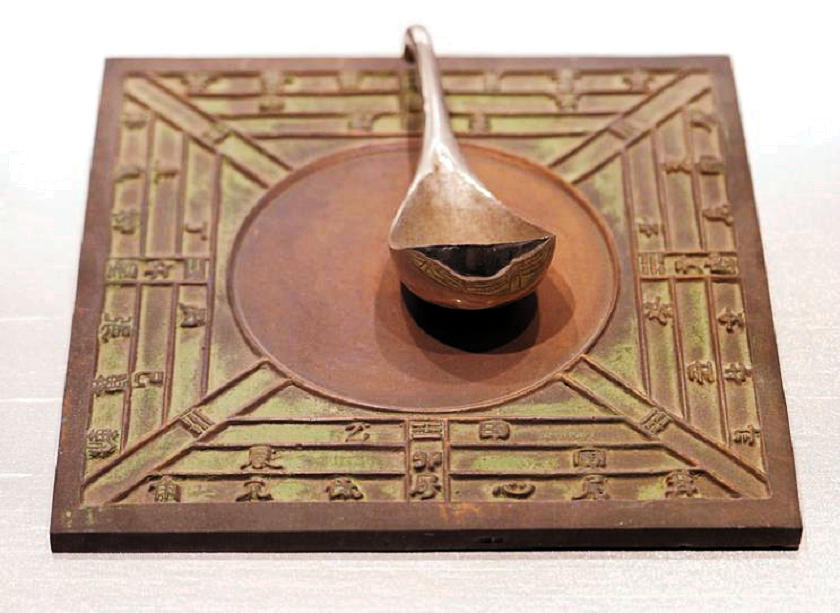
The origin of the compass can be traced back to ancient China. Its development roughly followed a path from the “sinan” (a south-pointing device using natural lodestone) to artificially magnetized magnetic needles, and finally to the compass combining a magnetic needle with a directional plate. However, whether the “sinan” was truly the earliest magnetic directional tool remains a subject of scholarly debate.
🧭 Traditional View: From “Sinan” to the Magnetic Needle
Traditionally, the ancestor of the compass is considered to be the sinan, which appeared during the Warring States period.
-
Form and principle: The sinan was carved from natural lodestone in the shape of a spoon and placed on a smooth “plate.” When it came to rest, the handle of the spoon would point south.
-
Textual records: The Han Feizi from the Warring States period mentions that “the former kings established the sinan to determine morning and evening,” and the Guiguzi records that people from the state of Zheng carried a sinan when gathering jade to avoid getting lost. Eastern Han scholar Wang Chong gave a more specific description of its use in Lunheng: “The ladle of the sinan, placed on the ground, its handle points south.”
-
Limitations and improvements: Natural lodestone has weak magnetism and is difficult to work with, so the sinan’s sensitivity and accuracy were limited. By the late Tang dynasty, people learned to magnetize iron needles by rubbing them with lodestone, producing more practical and portable magnetic needles. During the Northern Song dynasty, Shen Kuo recorded various methods of mounting magnetic needles in Dream Pool Essays (such as floating them on water or suspending them on silk threads) and discovered the phenomenon of magnetic declination.
⚠️ Scholarly Controversy: Was the Sinan Really a Lodestone Spoon?
Although “the sinan is the predecessor of the compass” is the most widely circulated view, it is not without objections.
Some scholars point out that interpreting the “sinan” as a magnetic directional device presents difficulties in both experimental reconstruction and textual interpretation. They argue that “sinan” in ancient texts may refer to the Big Dipper, or to the south-pointing chariot (a device relying on mechanical gears rather than magnetism). Therefore, the authenticity of the sinan as a magnetic directional tool, and whether it was indeed the direct source of the compass, still require further research.
💎 Summary
Overall, the origin of the compass is an evolutionary process from natural magnets (the sinan) to artificially magnetized needles. Regardless of the controversy surrounding the sinan, by the late Tang to Northern Song period, magnetic needle-based directional tools had matured and were soon applied to navigation (as recorded in the Northern Song Pingzhou Ketan, which notes “observing the compass in cloudy weather”), ultimately profoundly changing the history of world navigation.